

NOTE: If you would like to buy three or more of the following games, there is a R25 discount per game.
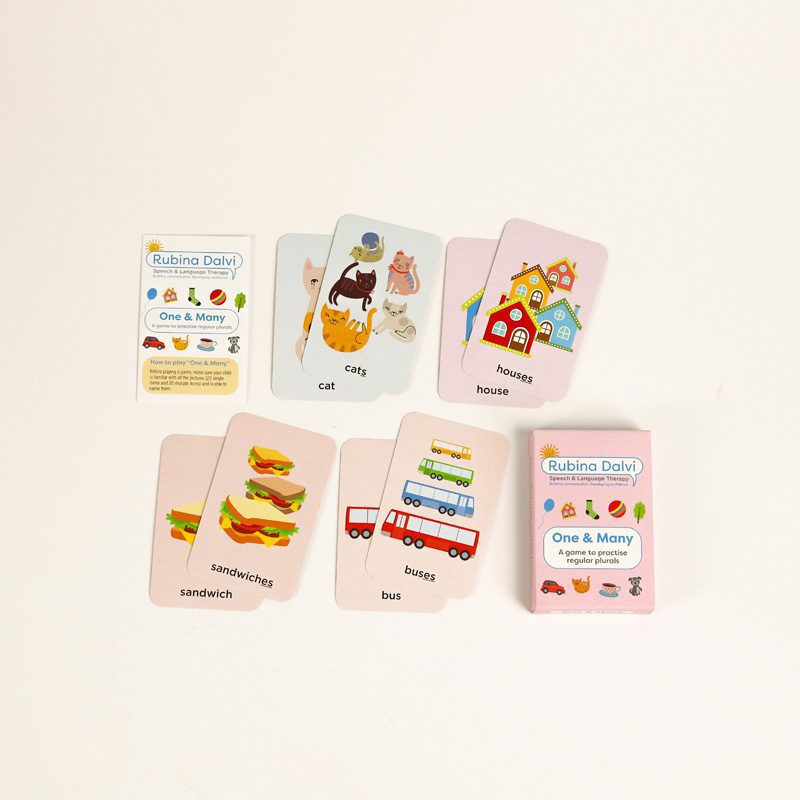
One and Many: A Game to Practise Regular Plurals
Children start to learn about regular plurals between the ages of three and four. This is when they start to understand the difference between one and many objects, as well as the use of the -s and -es endings. The interactive games that you can play with the One & Many card deck can help your child to understand and use regular plurals by looking at pictures of one and many objects in a fun and engaging way.
Stock Code: RDST1
Price: R275
Hierdie speletjie is vertaal na 'n Afrikaanse weergawe.
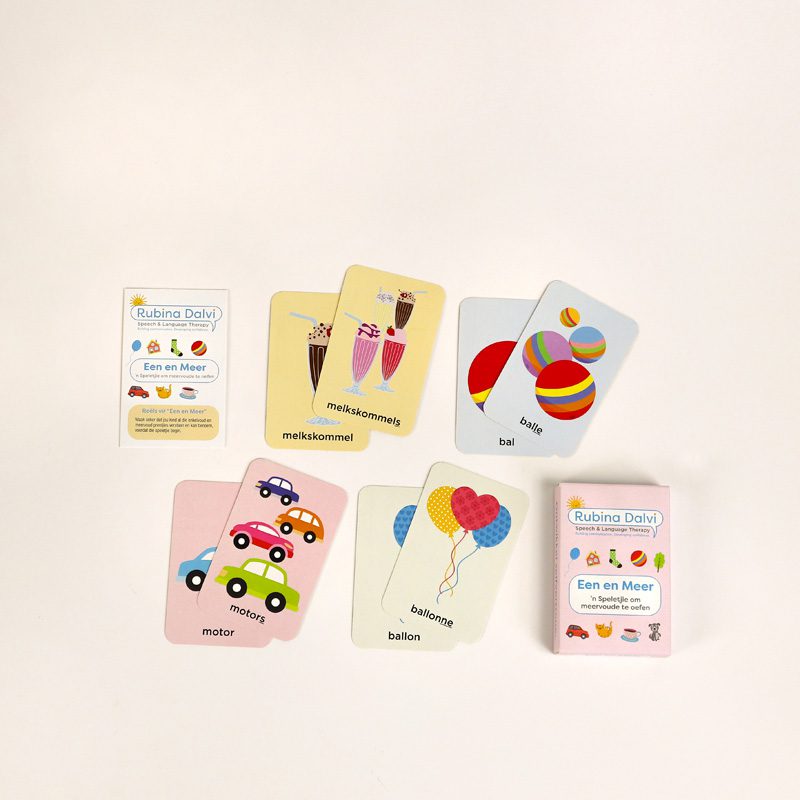
Een en Meer: n’ Speletjie om Meervoude te Oefen
Children start to learn about regular plurals between the ages of three and four. This is when they start to understand the difference between one and many objects, as well as the use of the -s and -es endings. The interactive games that you can play with the Een en Meer card deck can help your child to understand and use regular plurals by looking at pictures of one and many objects in a fun and engaging way.
Stock Code: RDST2
Price: R275
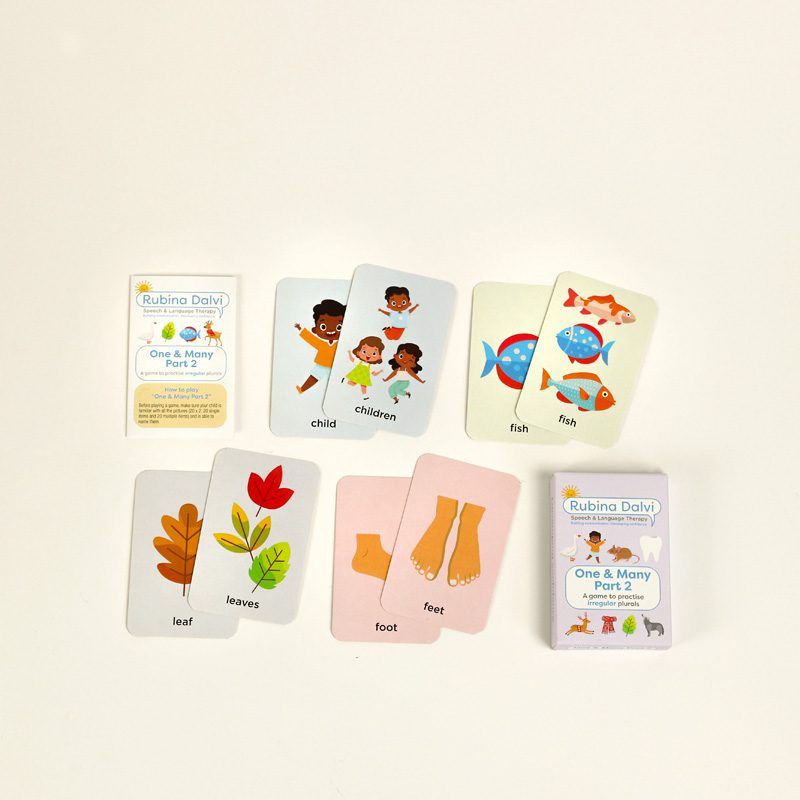
One and Many Part 2: A Game to Practise Irregular Plurals
Children typically start using irregular plural noun forms from age 5 years onwards. Irregular plural nouns do not follow the typical rules for regular plural forms, which can make learning them a bit tricky. The irregular plurals card deck provides an interactive way for children to practise using irregular noun forms, such as foot and feet or tooth and teeth, while playing the different games
Stock Code: RDST3
Price: R275
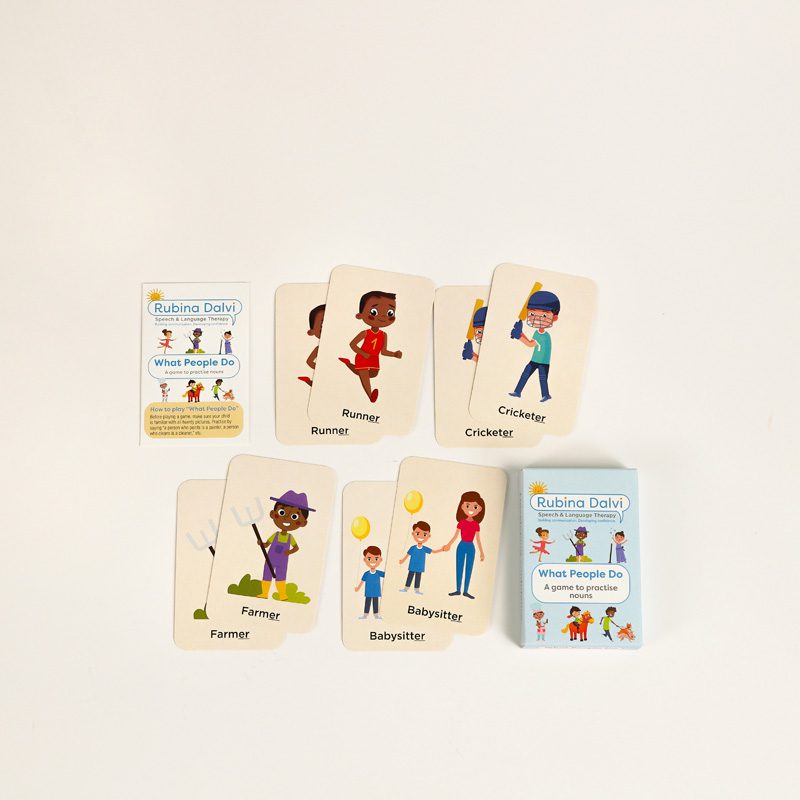
What People Do: A Game to Practise Nouns
The -er ending in a word indicating ‘person who’ is usually learned around the age of five. This means that children can start to say that a person who farms is a farmer. This is an important step towards learning that a verb can become a noun. The What People Do card deck is an entertaining way for children to learn to use nouns ending in -er.
Stock Code: RDST4
Price: R275
Hierdie speletjie is vertaal na 'n Afrikaanse weergawe.
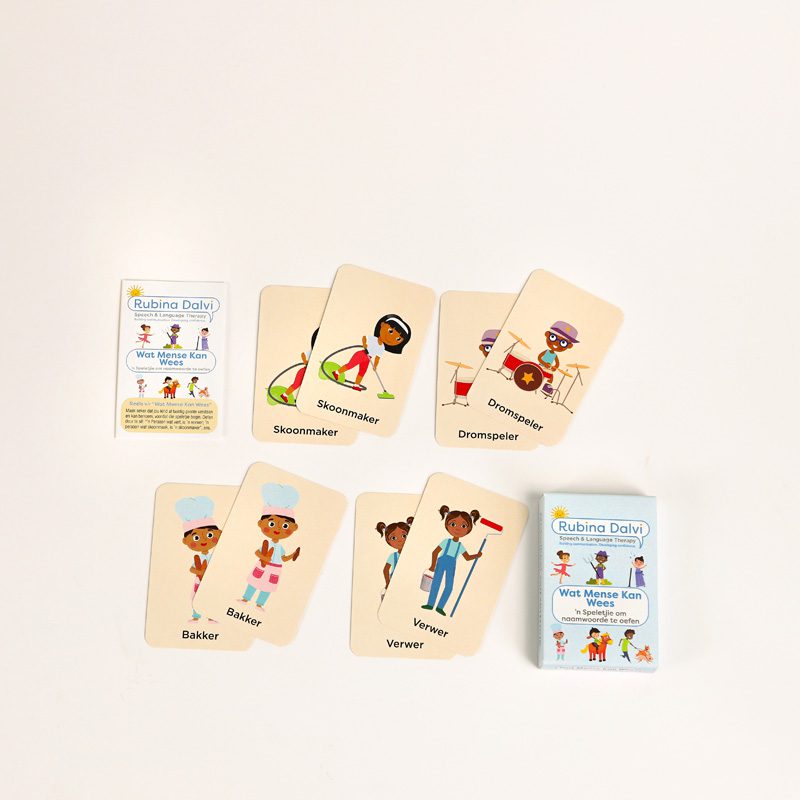
Wat Mense Kan Wees: n’ Speletjie om Naamwoorde te Oefen
The -er ending in a word indicating ‘person who’ is usually learned around the age of five. This means that children can start to say that a person who farms is a farmer. This is an important step towards learning that a verb can become a noun. The Wat Mense Kan Wees card deck is an entertaining way for children to learn to use nouns ending in -er.
Stock Code: RDST5
Price: R275
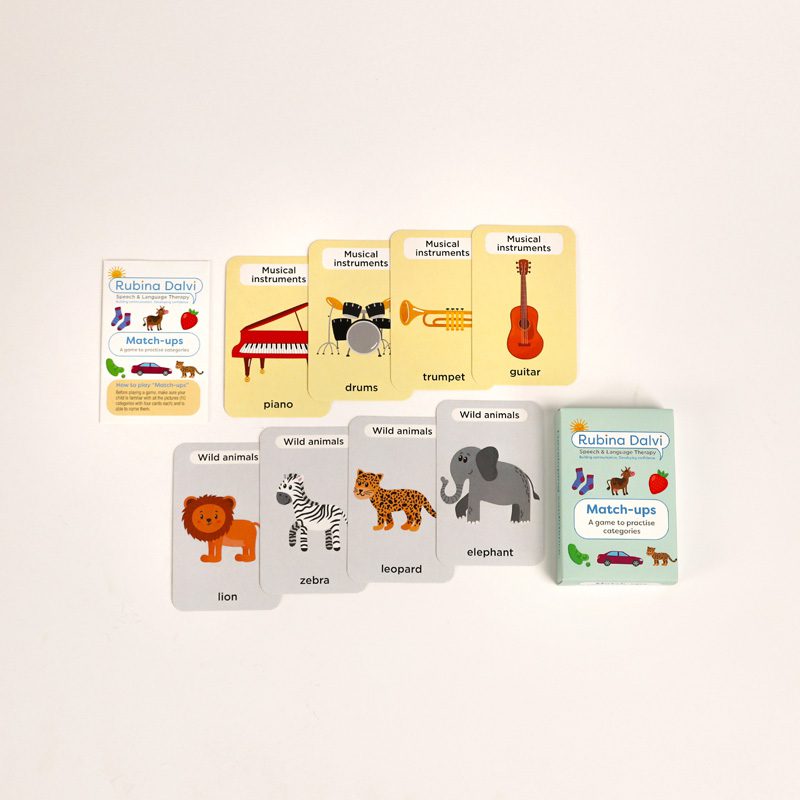
Match-Ups: A Game to Practise Categories
Children usually start to learn about categories from the age of four onwards. Putting words into categories helps them to make connections between words in terms of their meaning and also helps them to understand the similarities and differences between words. Playing Match-Ups is a good way for children to learn and practise their categorisation skills.
Stock Code: RDST6
Price: R275
Hierdie speletjie is vertaal na 'n Afrikaanse weergawe.
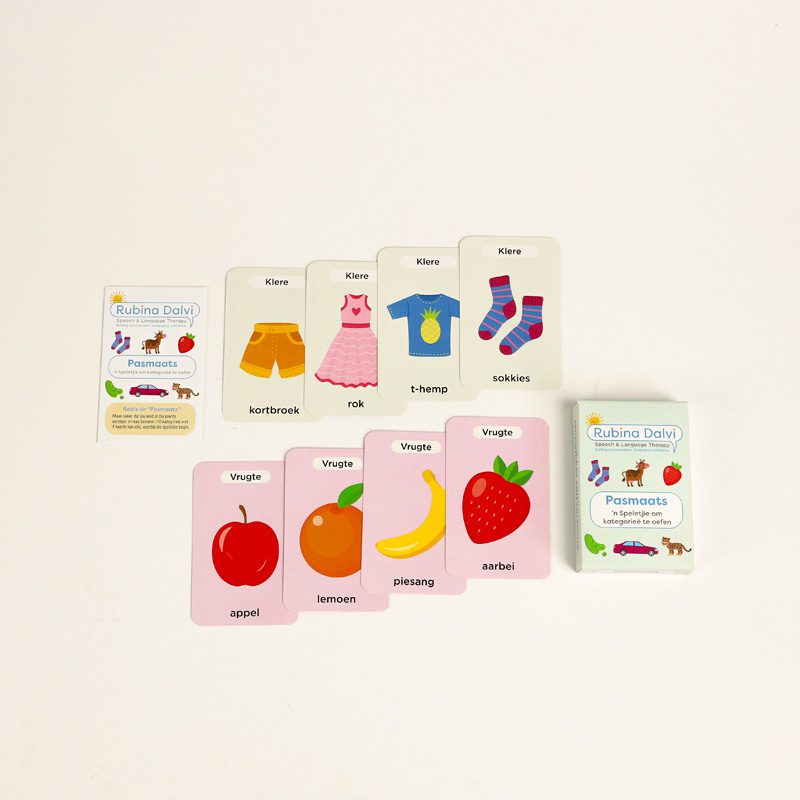
Pasmaats: ‘n Speletjie om Kategorieë te Oefen
Children usually start to learn about categories from the age of four onwards. Putting words into categories helps them to make connections between words in terms of their meaning and also helps them to understand the similarities and differences between words. Playing Pasmaats is a good way for children to learn and practise their categorisation skills.
Stock Code: RDST7
Price: R275
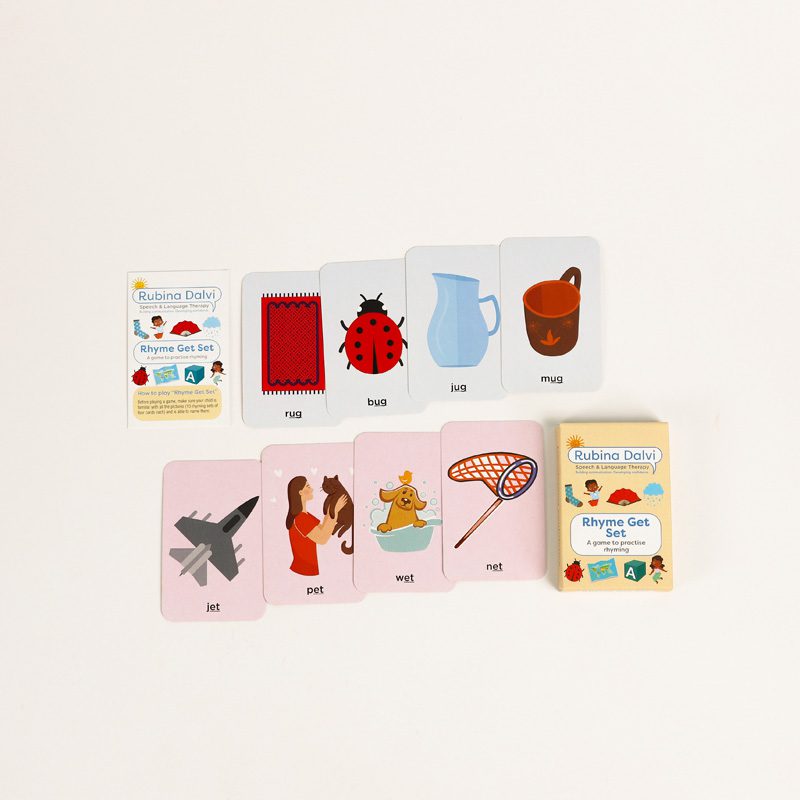
Rhyme Get Set: A Game to Practise Rhyming
Rhyming usually develops in the pre-school years from around the age of five, when children start to identify rhyming words. Some children start rhyming from a younger age. Rhyming is an important phonological awareness skill that assists with building later reading development. Playing Rhyme Get Set will help your child to practise their rhyming skills in an interactive way.
Stock Code: RDST8
Price: R275